Mastering the Watering Techniques for Succulents

Intro
Understanding the art of watering succulents is pivotal for anyone hoping to cultivate these hardy plants successfully. At first glance, watering might seem like a straightforward task, but for succulents, it comes with its own unique set of principles and practices that differ significantly from typical houseplants. A keen grasp of these nuances can mean the difference between flourishing greenery and wilting succulents.
When you step into the realm of succulents, you’ll quickly discover that their hydration needs are not one-size-fits-all. Different species, from the plump Echeverias to the spiky Agaves, exhibit varying preferences for moisture levels. This variability highlights the importance of knowing your specific plant species and adapting your watering routine accordingly.
Furthermore, external environmental factors play a critical role in how often and how much you should water your succulents. A cactus basking in full sun in the desert will undoubtedly require a different approach compared to a succulent nestled in a humid indoor space.
In this article, we dive deeper into these intricacies. We will not only cover how to assess a succulent's watering needs but also aim to dispel prevalent myths that often lead to confusion and mismanagement. By the end of this guide, you’ll have a comprehensive understanding of moisture management that will empower you to nurture healthy, thriving succulents in any setting.
Understanding Succulents and Their Water Needs
Understanding the water needs of succulents plays a crucial role in their care. While they are often categorized as low-maintenance plants, it's essential to recognize the specific moisture requirements that can differ significantly among various species. The way succulents interact with water is quite illustrative of their adaptations to arid environments, which is key to keeping these lovely plants thriving.
Fostering a comprehensive grasp of how succulents manage water bolsters a gardener's ability to create conducive growth conditions. Over- or under-watering can be detrimental; thus, understanding their unique needs can lead to more successful plant care, ultimately resulting in healthier and more vibrant succulents.
Defining Succulents
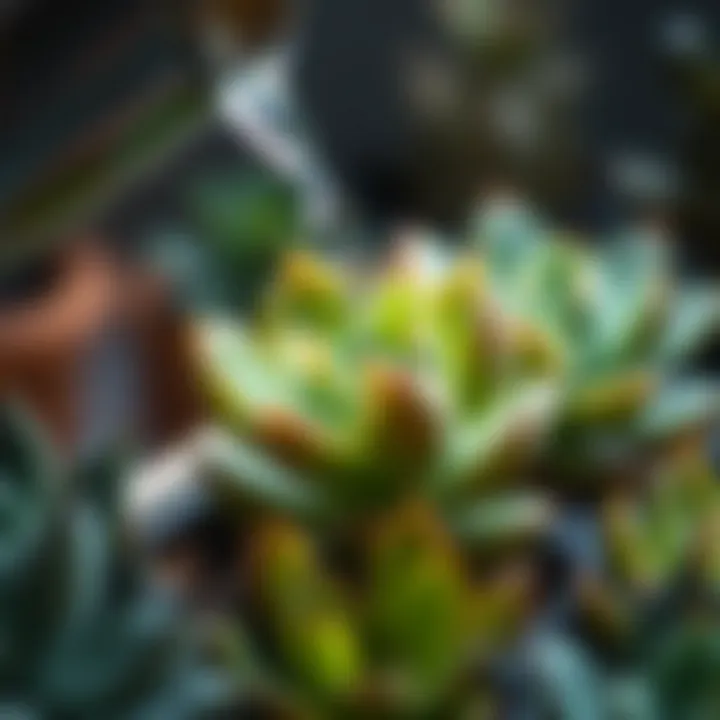
Succulents are fleshy, water-storing plants that have evolved to survive in regions where water is scarce. They belong to various families within the plant kingdom, with a wide array of species boasting various shapes and colors. Common varieties like Aloe Vera, Echeveria, and Haworthia exhibit distinctive appearances and growing habits. Essentially, a defining feature of succulents is their thickened tissues that enable them to conserve water.
These plants have developed mechanisms to withstand drought, making them popular choices for home gardens and indoor spaces alike. The presence of specialized structures, such as waxy coatings and deep root systems, allows them not only to gather and store water but also to minimize evaporation.
How Succulents Store Water
Succulents store water in specialized structures, primarily in their leaves and stems. These reservoirs enable them to survive extended periods without rainfall. For instance, in the case of a Jade plant, its round leaves are not just for decoration—they serve as water storage sites that swell when moisture is available and slightly shrink during dry spells.
Additionally, the cellular structure of succulents includes parenchyma cells, which have large vacuoles, housing the stored water. This adaptation is much like a sponge, soaking up water during periods of abundance and releasing it when needed. Such a feature makes them rather resilient and suited to uncertain climates.
Species Variation in Water Requirements
When it comes to watering, not all succulents follow the same playbook. Different species vary significantly in their water needs, influenced by the environments where they naturally thrive. For instance, the hardy Agave species, originating from deserts, can tolerate long dry spells better than the more delicate Kalanchoe, which demands a more consistent moisture level.
This variation necessitates a tailored approach to watering, as some prefer to dry out between watering sessions, while others might need more frequent hydration. Knowing your plants and their natural habitats allows you to mimic those conditions as much as possible, ensuring your succulents receive just the right amount of water.
"Success in cultivating succulents is hinged on understanding their intrinsic relationship with water, reflecting their adaptability and resilience."
Ultimately, a keen awareness of these parameters will set you on the path to mastering succulent care. Their unique and captivating nature adds to the charm, making the effort to understand their needs all the more rewarding.
The Science Behind Watering
Understanding the science behind watering is pivotal for any succulent enthusiast. It’s not simply about pouring water into a pot; it’s about grasping the intricate relationship between water and these unique plants. Knowing how water interacts with their environment, their soil, and their anatomy paves the way to mastering their care. Proper watering can mean the difference between vibrant growth and a wilting, lifeless plant. This section addresses the significance of various factors that influence watering practices, enhancing our comprehension of when and how to water succulents effectively.
Soil Composition and Moisture Retention
Soil is not just a support for plants; it’s an ecosystem that influences everything from water retention to nutrient availability. The composition of soil determines how much moisture it can hold and how quickly it drains. A mix that includes ingredients like coarse sand, perlite, and organic matter promotes good drainage while still retaining enough moisture for succulents to thrive.
- Coarse Sand: Allows water to move freely, preventing root rot.
- Perlite: Enhances aeration and helps with drainage.#
- Organic Matter: Provides nutrients while retaining some moisture.
An ideal succulent soil blend should mimic the natural habitats of these plants, which often include rocky, arid landscapes. Regular potting soil may hold too much water, putting succulents at risk for overwatering. When creating a mixture, be sure to consider the moisture needs of your particular species.
The Role of Root Systems
Succulents possess specialized root systems that are uniquely adapted to their environments. The way these roots function plays an essential role in determining how often and how much you should water. Unlike other plants, succulent roots can store water, allowing these plants to survive extended dry periods.
Roots not only anchor the plant but also take in water and nutrients from the soil. If the roots are healthy and well-adapted, they can absorb water more efficiently. On the flip side, if they are waterlogged or diseased, they struggle to take up moisture, leading to stress.
- Deep Roots: Enable plants to access water deeper in the soil.
- Shallow Roots: See rapid absorption but can dry out quickly during hot weather.
Understanding root behavior can help you adjust your watering practices based on the plant’s growth stage and environmental conditions.
Photosynthesis and Water Usage
Photosynthesis is the lifeline of succulents. Through this process, plants convert sunlight into energy, with water being a key ingredient. Succulents, though water-efficient, still require adequate moisture for photosynthesis. When the environmental stress levels rise, such as during extreme heat or lack of light, a plant's water usage can soar. Thus, it's crucial to find a balance.
The rate of photosynthesis varies among different succulent species. For instance:
- Echeveria: Needs moderate to high light; can consume more water.
- Aloe Vera: Requires less sunlight and is generally more tolerant of neglect but still needs watering during active growth.
By monitoring light conditions and adjusting watering habits accordingly, you can significantly impact their overall health and productivity.
"Watering succulents is less about making them wet and more about understanding their needs."
In closing, the scientific aspects of watering reveal that these plants are not just passive recipients of moisture. Instead, each element—whether it be soil composition, root systems, or photosynthesis—interacts in a way that demands attentiveness and knowledge from their caretaker. Learning these principles allows for informed decisions that foster resilience and beauty in your succulent collection.
Optimal Watering Techniques
When it comes to nurturing succulents, optimal watering techniques stand as a cornerstone of effective care. These methods not only help in maintaining the plant’s health but also enhance its growth and overall vitality. Understanding how to water your succulents correctly can prevent the all-too-common fatal mistakes of both overwatering and underwatering, ensuring that your cherished green companions thrive.
Watering Methods: From the Top or Bottom?
In the age-old debate of top versus bottom watering, the essence lies in the concept of moisture distribution. Watering from the top involves pouring water directly onto the soil surface. While this method allows for visual confirmation of water intake, it can occasionally lead to uneven moisture levels, particularly if the soil isn’t structured to evenly absorb water.
On the other hand, bottom watering involves placing the pot in a shallow tray with water and letting it soak up from the bottom. This process encourages deep root growth and often prevents the risk of over-saturating the upper soil layers. It's particularly effective for those with a tendency to water too heavily because it allows plants to absorb only what they genuinely need. This technique also reduces the chances of waterlogging, which can suffocate the roots.
"Watering your succulents is like a fine dance; too much enthusiasm can lead to missteps, but with the right technique, you’ll find harmony.”
Timing: When to Water
Timing is everything. Recognizing when to water your succulents can make all the difference. A general rule of thumb is to water when the soil is dry, but that can often be misleading without further context. Factors like the type of succulent, pot size, and environmental conditions greatly influence moisture levels.
A good practice is to check the soil’s moisture by sticking your finger about an inch deep into the soil. If it feels dry at that depth, it’s time to water. This tactile method can be more reliable than relying solely on a watering schedule, which might not cater to your plant’s specific needs.
Another thing to watch for is the time of day; many people find that watering in the late afternoon or early evening allows succulents to drink without the immediate evaporation that can occur with the harsh midday sun. This timing also gives the plants a good imbibing period before temperatures drop overnight.
Seasonal Adjustments in Watering
Adapting watering practices to seasonal changes is integral for succulent health. Succulents often enter a dormant phase in the winter months, meaning they require significantly less water. A common mistake is to continue the same watering routine used during the active growth months of spring and summer.
In the warmer months, succulents are in full growth mode and manage more frequent watering. Here, humidity, temperature, and light conditions should guide your watering frequency and volume. Conversely, as the temperatures dip in winter, cut back on watering to just once every 3-4 weeks, allowing the soil to dry out thoroughly between watering sessions.
In summary, cultivating an effective watering technique requires a blend of methods and an adaptable mindset. Shifting your approach based on the type of succulent, seasonal changes, and careful observation are your best allies in ensuring your plants thrive.
Identifying Signs of Water Imbalance
Understanding how to identify signs of water imbalance in succulents is paramount for any gardener aiming to keep these resilient plants healthy. Given their unique biology and adaptation strategies, both overwatering and underwatering can produce distressing symptoms that may lead to the plants’ decline. By cultivating an awareness of these signs, you can foster an environment that suits the varying needs of your succulent collection and thereby enhance your gardening success.
Overwatering Symptoms
Overwatering can be a silent killer for succulents. Despite thriving in arid conditions, these plants are not immune to the detrimental effects of an excess of water. One common symptom of overwatering is yellowing leaves, particularly at the base of the plant. This can sometimes be mistaken for general aging, but it often signifies that the roots are suffocating due to waterlogged soil. Additionally, if you notice that leaves are becoming translucent or mushy, it’s a clear red flag. Such changes usually indicate that the plant's cells are bursting under pressure, a sure sign it's been overly pampered with water.
"If your succulents start resembling a soggy sponge, it's high time to curb the watering!"


Another telltale symptom is the presence of root rot, which can manifest as a foul odor coming from the soil or visible blackened roots upon inspection. Such conditions not only stress the plant but can also lead to its demise if not promptly addressed. If the foliage starts dropping off or shows signs of severe wilting despite having wet soil, it might be time to reconsider your watering schedule.
Underwatering Indicators
On the flip side, underwatering is just as perilous. Succulents have evolved to survive in dry environments, but this doesn’t mean they can go without water altogether. A classic sign of underwatering is the formation of wrinkled leaves. The plant appears shriveled, as if it’s holding its breath. Similarly, if you observe that the leaves are losing their firmness and are easily bent or twisted, the succulent may be shy on hydration.
You may also find leaf drop occurring, where healthy-looking leaves suddenly fall off, leaving the plant looking bare. This drastic behavior is often indicative of a desperate search for moisture. Furthermore, the tips of the leaves might develop a brown, crispy texture, which can escalate quickly if not rectified. It is crucial to act before the dehydration spirals out of control; providing an adequate amount of water promptly could save your plant from a complete meltdown.
Managing Stress Responses in Succulents
Once you’ve pinpointed whether your succulent is facing overwatering or underwatering, managing the stress responses becomes crucial. For overwatered plants, the first step involves allowing the soil to dry out completely before reintroducing water. Examination of the root system might be required; healthy roots should be firm and white. If you discover any soggy, blackened roots, these should be trimmed away to prevent the rot from spreading.
Conversely, managing a thirsty succulent usually calls for a gradual rehydration process. Soak the soil thoroughly and consider reducing the frequency of watering sessions. It is essential to approach this delicate balance thoughtfully, as sudden changes in irrigation can send the plants into shock.
In summary, attentiveness to your succulents’ signs will not only enhance their health but also enrich your experience as a gardener. A vigilant eye can spell the difference between a flourishing plant and one that struggles against adversity.
Environmental Factors Affecting Watering
In the realm of succulent care, understanding environmental factors is paramount to ensuring these unique plants thrive. Unlike more traditional houseplants, succulents possess specific requirements that vary widely based on their surroundings. By examining these elements, one can craft more effective watering strategies tailored to the needs of individual species.
Impact of Light Conditions
Light is arguably the most influential environmental aspect for succulents. Different succulents have varying light requirements; some prefer direct sunlight, while others thrive in partial shade. Too much sunlight can scorch leaves, leading to brown patches and wilting, whereas insufficient light can stymie growth, causing them to stretch and become leggy. Therefore, assessing light conditions is crucial, not only for determining the ideal spot for succulents but also for timing watering.
During bright summer months, it's advisable to increase watering frequency since strong sunlight can evaporate moisture quickly. Conversely, in winter, when days are shorter and natural light is limited, reducing the amount of water is beneficial. The subtle dance between light and water showcases the importance of aligning one’s watering routine with the natural environment.
"A plant's needs shift like the sun, and so must the caretaker's approach."
Temperature Considerations
Temperature plays a critical role in a succulent's water uptake. Most succulents thrive in warmer conditions, typically found in temperate climates. When temperatures rise, transpiration—the process through which plants lose water through their leaves—increases significantly. This means that soil dries out faster than one might expect, necessitating more frequent watering. Cold temperatures, on the other hand, slow down both growth and moisture uptake, leading to potential waterlogging if the soil is kept too moist.
When fall approaches and temperatures drop, it’s wise to reassess your watering schedule. A general rule of thumb is to decrease watering as the seasons change, allowing the plants time to adjust.
Humidity Levels and Their Effects
Humidity is another aspect that, while often overlooked, carries weight in succulent care. Succulents are desert dwellers by nature and prefer drier air conditions. High humidity can lead to excessive moisture in the soil, creating an environment ripe for root rot and other fungal diseases.
In areas with consistently high humidity, observe your plant for signs of distress. Adjustments to the watering schedule might be necessary; reducing frequency or ensuring that the potting mix dries out completely between waterings can mitigate risks associated with humid conditions. On the flip side, if you reside in a particularly arid region, occasional misting can help hydrate the air around your succulents, particularly during the peak of summer.
Water Quality and Its Importance
When nurturing succulents, one often overlooks the water used to irrigate them. Yet, the quality of that water plays a vital role in the overall health of these plants. Just as humans need clean drinking water, your succulents thrive when given the right water, free from harmful substances and with the appropriate chemical balance. In this section, we will explore the various aspects of water quality and why they matter in watering succulents.
The benefit of understanding water quality is monumental. Not only will it enhance the growth of your plants, but it can also prevent long-term damage that might stem from using inappropriate water sources. From tap water to rainwater, the choice of water can influence everything from growth rates to susceptibility to diseases.
The Impact of Tap Water versus Rainwater
Many gardeners often reach for the garden hose or kitchen tap when it’s time to water. However, not all tap water is created equal. It often contains minerals, chlorine, and sometimes even fluoride, all added for human health but not particularly beneficial for succulents. If you fill up the watering can with straight tap water, it might not be the best choice for your plants.
On the other hand, rainwater is celebrated among plant lovers for its purity and lack of harsh chemicals. It provides a gentle, natural source of hydration that mimics the plants' native environments. Rainwater is typically softer and has a more balanced mineral composition. Collecting rainwater in barrels can be an efficient and sustainable method to care for your succulents.
"Using rainwater is one of the simplest yet most effective ways to boost your plants' health."
Understanding Water pH Levels

The pH level of the water is another crucial factor. Most succulents prefer slightly acidic to neutral pH levels, typically between 6.0 and 7.5. If you water your plants with water that’s too alkaline or overly acidic, you risk nutritional deficiencies. For instance, a high pH can prevent the uptake of essential nutrients like iron and magnesium, leading to poor growth and discoloration of the leaves.
Testing the pH level of your water is straightforward. You can use inexpensive pH testing strips or kits available at garden stores. Adjustments can be made using vinegar to lower pH or baking soda to raise it, but it’s wise to make gradual changes—plants can be finicky with rapid shifts.
Contaminants and Harmful Chemicals
A water source may also harbor various contaminants that can harm plants. Pesticides, heavy metals, or bacteria can find their way into your water supply, posing a risk to your succulents. The presence of substances like copper and lead can not only create nutrient imbalance but might also lead to root rot or other diseases.
To ensure that you’re using safe water, consider filtering your tap water or opting for distilled or filtered water when in doubt. This filtration reduces the risk of unwanted chemicals and impurities and can promote a healthier growing environment for your plants.
Tools and Resources for Effective Watering
When it comes to helping succulents thrive, having the right tools and resources can make a world of difference. These plants are unique in their water storage capabilities, which means they can be quite particular about their watering needs. By utilizing specific equipment and resources, you can ensure that your watering regimen is efficient, effective, and tailored to the specific requirements of your succulent species.
Soil Moisture Meters
One of the most beneficial tools in a succulent caretaker's toolkit is the soil moisture meter. These handy gadgets help take the guesswork out of watering. By inserting the probe into the soil, you get a direct reading of the moisture level.
- Why It Matters: With a moisture meter, you can accurately determine when to water, avoiding both overwatering and underwatering.
- Considerations: They come in various designs, and while digital models may offer more precision, a simple analog version can be just as effective for most home gardeners.
- Use Cases: If you've ever wondered why your succulent is looking a bit droopy or mushy, a soil moisture meter can provide that critical insight.
Watering Cans and Systems
Investing in a quality watering can or system is vital for consistent and gentle watering. A standard watering can allows for targeted application, minimizing the chance of water pooling around the plant's base.
- Types: There are specialized watering cans that have narrow spouts designed to get the water exactly where it’s needed, typically at the soil level. This helps prevent leaf rot.
- Systems: For those with a larger collection of succulents, using a drip irrigation system might be worth considering. It can automate the process, ensuring even and consistent moisture levels.
- Other Considerations: Pay attention to the material of the watering can. Plastic cans may be lightweight, but metal ones have the advantage of durability.
Apps for Monitoring Plant Needs
Modern technology has a way of simplifying gardening tasks. There are numerous apps available that help monitor the watering needs of your plants, including succulents. These apps often allow you to track your watering schedule and receive reminders.
- Functionality: Some apps can even track environmental conditions, like humidity and light exposure, which are critical for succulent health. This way, you can adjust your watering practices based on real-time data.
- User-Friendly: Many of these apps are intuitive, making it easy for even novice gardeners to utilize the tools effectively. Features like photo logging and reports can help you observe trends over time.
- Recommendations: Some popular options include Plant Care or Waterbot, which are well-rated among plant enthusiasts.
"Having the right tools is like having a map in a dense forest; without it, you're bound to get lost."
By equipping yourself with the right tools—be it a soil moisture meter, an efficient watering can, or a helpful app—you'll set yourself up for success in your succulent care journey. Consistent attention and precise watering can transform your plants from fragile to flourishing, ensuring they thrive in their environment.
Epilogue: Crafting a Watering Strategy
Developing an effective watering strategy is not just a matter of routine; it’s crucial for ensuring the health and longevity of your succulents. These unique plants display diverse characteristics, yet they all share the fundamental need for proper moisture management. As you navigate through the intricacies of succulent care, the creation of a thoughtful, adaptable watering strategy becomes paramount.
By synthesizing the knowledge gained throughout this article, you understand that different species possess varying water needs and respond uniquely to environmental factors. An adaptable strategy allows you to cater to these differences. Careful observation and adjustment based on plant signals can significantly contribute to their growth, avoiding pitfalls such as over- or underwatering.
Another important consideration is the environment where your succulents reside. Factors like light, temperature, and humidity play a significant role in determining how much water your plants require. Crafting a watering strategy that accounts for these elements can enhance your succulents’ resilience and encourage flourishing growth.
In addition, it’s essential to remember that crafting a watering strategy is not a one-time task. As seasons change, you may need to revisit and adjust your approach. A well-planned strategy is dynamic, allowing for shifts in moisture needs.
Summary of Key Points
- Understanding Water Needs: Each succulent species has distinct hydration requirements; knowing these can prevent common mistakes.
- Environmental Impact: Light and temperature directly affect watering frequency; adjust accordingly.
- Observation is Key: Regularly check soil moisture and plant health to detect issues before they escalate.
- Dynamic Approach: Your strategy should evolve as seasons change, adapting to new conditions.
Emphasizing Adaptability
An adaptable watering strategy is the cornerstone of successful succulent care. It acknowledges that each plant behaves differently under varying conditions. For example, an Echeveria might need more water during summer months when sunlight is plentiful and temperatures are higher. Meanwhile, a Sedum could require minimal moisture once autumn sets in, as it enters a dormant phase.
It’s also beneficial to experiment with your watering schedule. One plant might thrive with a bi-weekly infrequent watering, whereas another might need a more liberal approach. Understanding this variability enhances your relationship with your plants and directly impacts their health.
"Gardening is a way of showing that you believe in tomorrow."
- Audrey Hepburn
In fostering that adaptability in your strategy, you cultivate not only a thriving garden but also a rewarding experience. Your succulents will reward your efforts with beauty and resilience, and you’ll enjoy the satisfaction that comes from effective, informed plant care.
For more insights and sharing experiences, visit Wikipedia Succulent Care or Reddit Gardening Community.